Why use html-email?
See it render
Open, download, or copy the actual email HTML. Both preserve the full cross-client compatibility engineering.
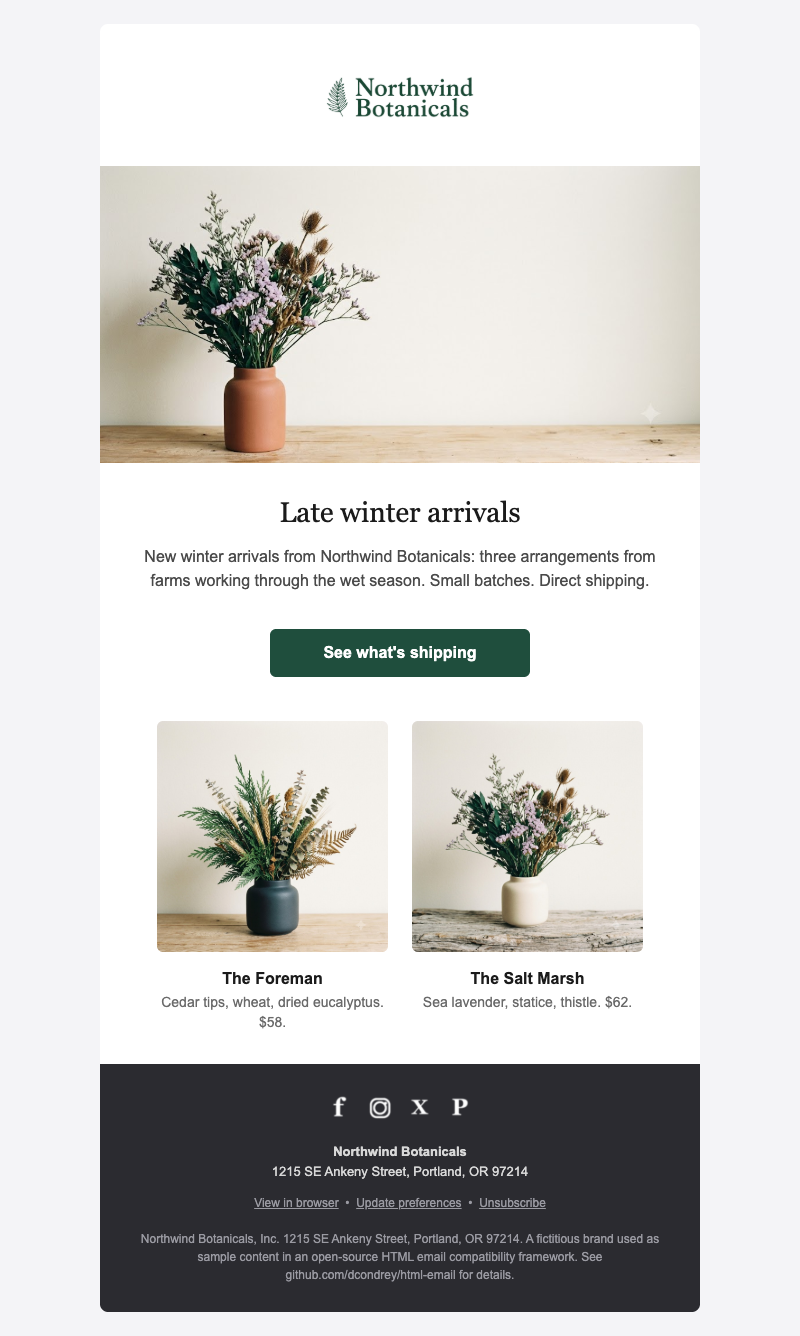
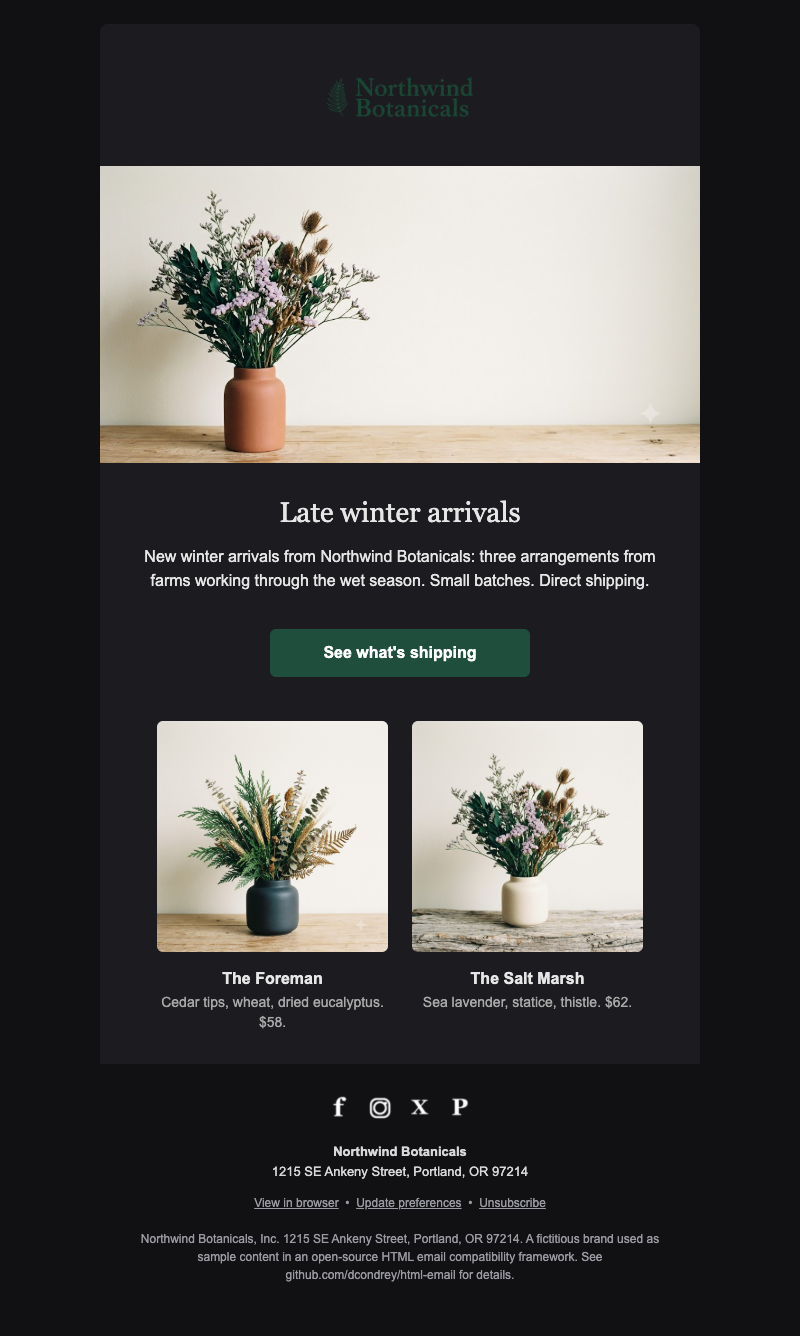
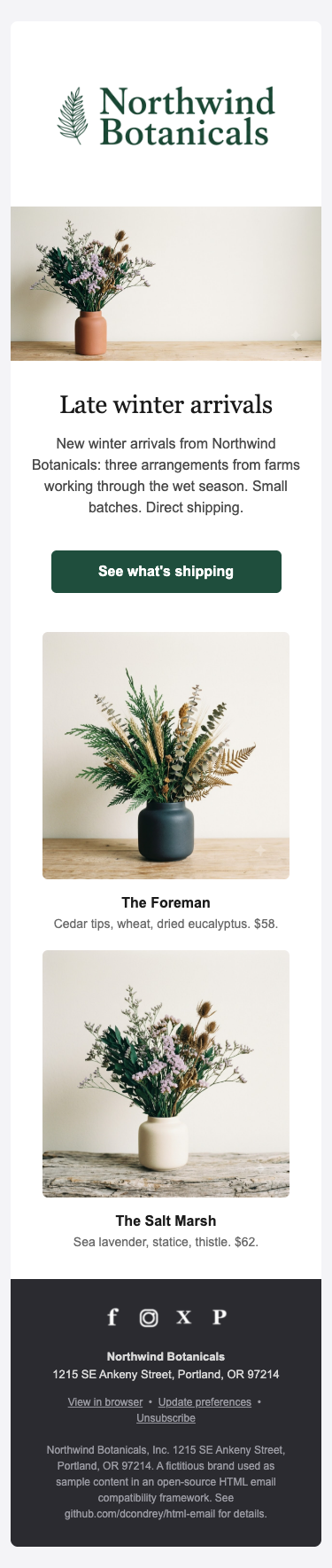
framework/ partials, populated with the Northwind Botanicals winter-arrivals campaign.
Branded templates
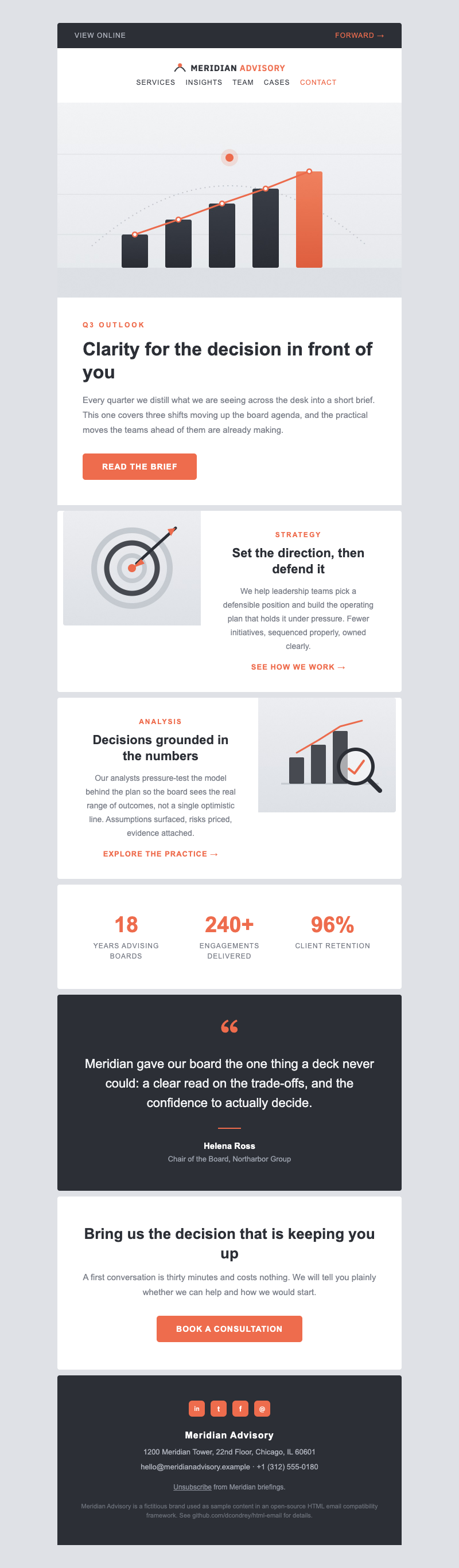
Five distinct designs, each rebuilt in the house conventions with a fictitious brand and self-authored generated art. Copy the HTML straight into your ESP, or download it to edit.
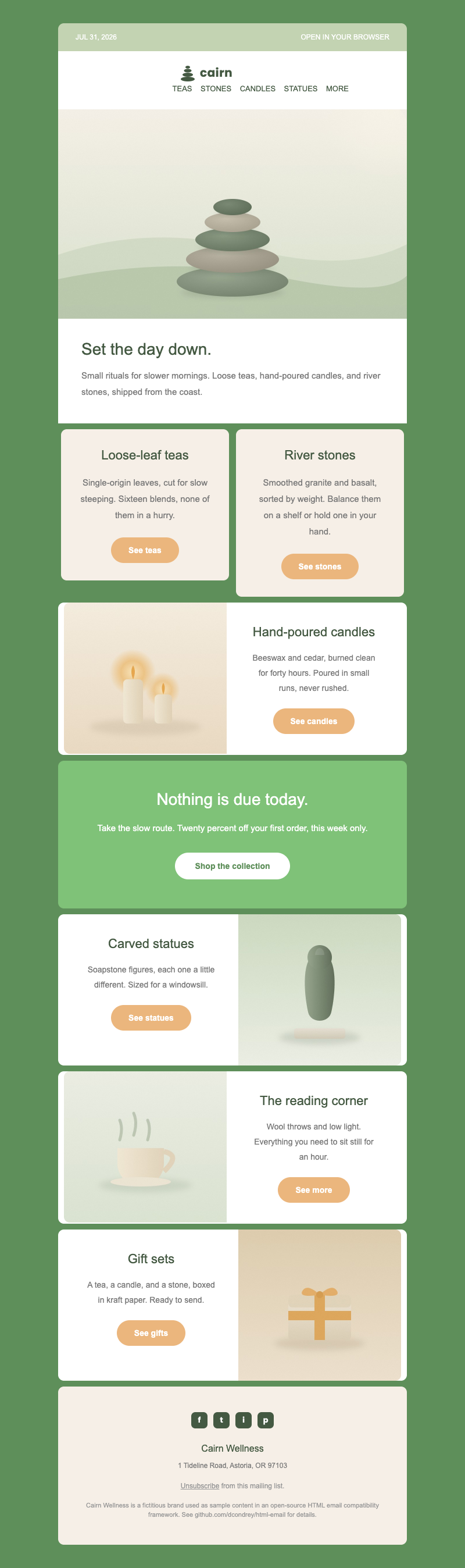
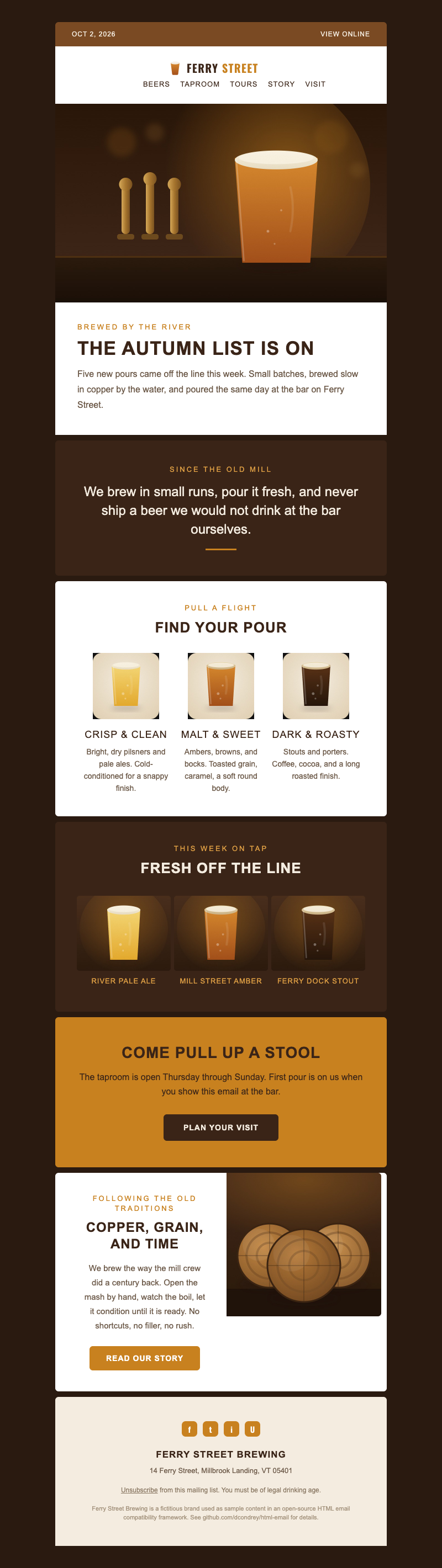
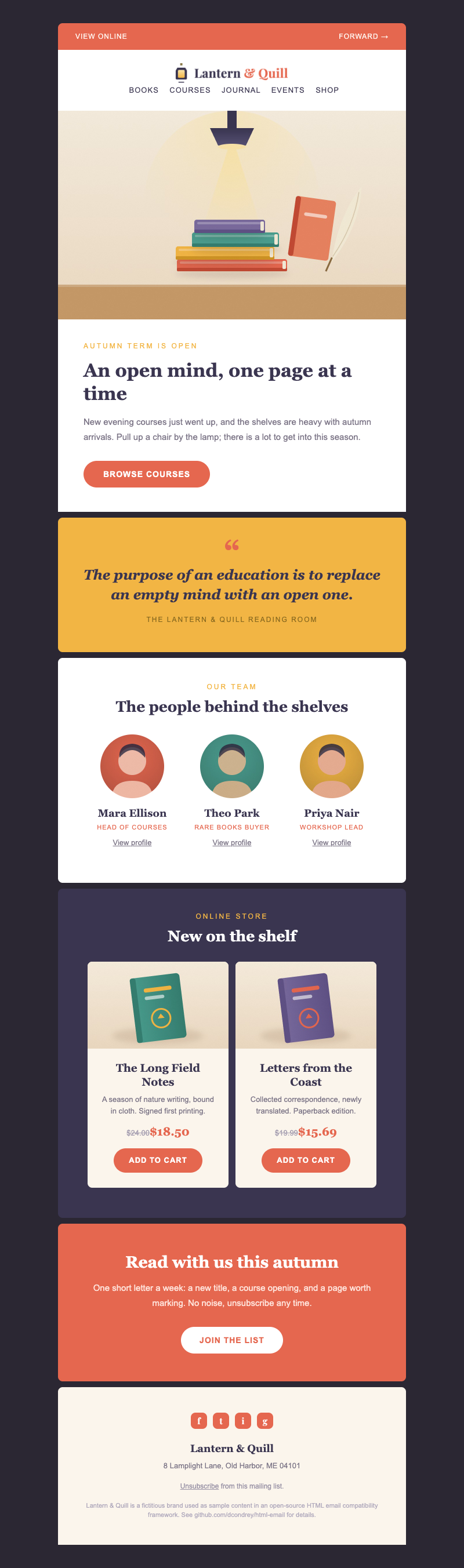
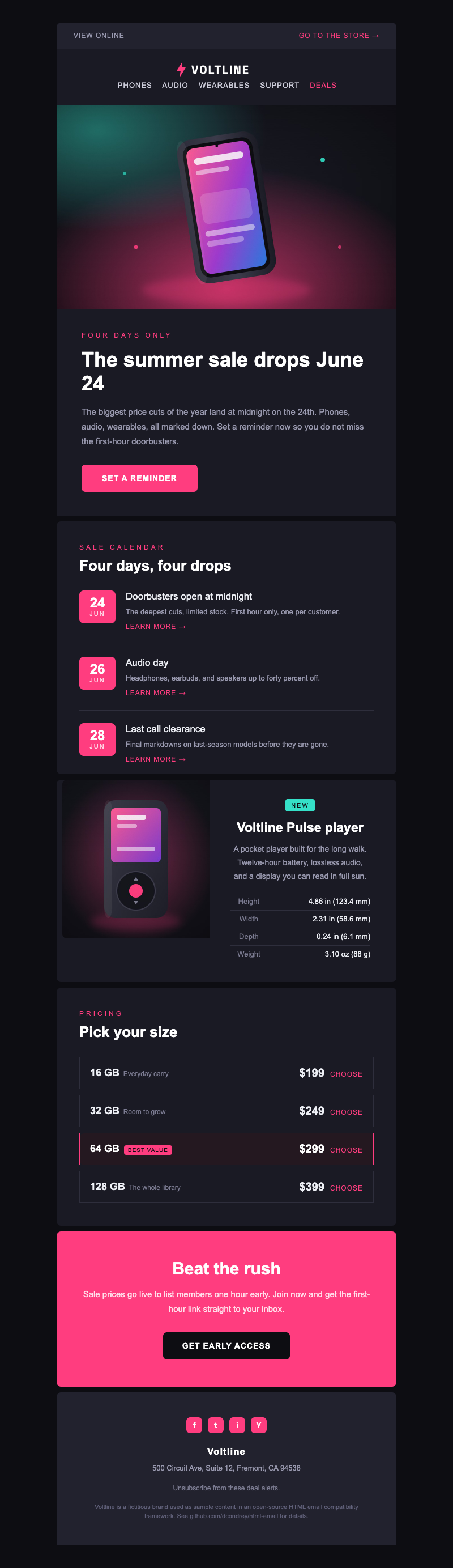
Previews
Rendered from the framework build via headless Chrome.
Lint your own email
The linter is zero-dependency and works on any HTML email, whatever built it — MJML, React Email, Maizzle, or hand-written. The default rule set is client behaviour every email is subject to, not this project's conventions.
node framework/build/lint.mjs campaign.html
It checks Gmail's 102 KB clip and 8 KB <style> cap, unbalanced CSS, missing alt/width, MSO conditional balance, the unsubscribe link, and more — with --json and --sarif output for CI.
Build it yourself
Zero dependencies. Assemble the partials and lint the output:
cd framework/build && node build.mjs && node lint.mjs --profile house ../dist/email.html